Introduction
In her paper, Kim Laband (from Julien Dumont’s lab), studied the mechanism of meiotic chromosome segregation in C. elegans oocytes. Among different techniques, high-resolution microscopy coupled with our ultra-fast shifting temperature controller was used.
Summary
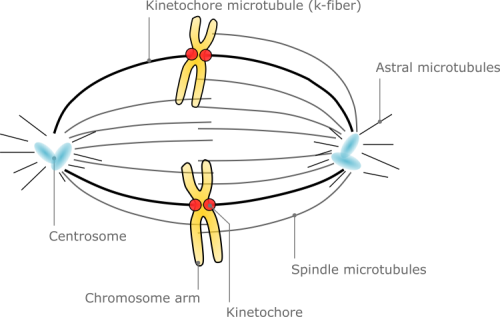
During cell division, spindle microtubules ensure an equal repartition of chromosomes between the two daughter cells. While the kinetochore-dependent mechanisms that drive mitotic chromosome segregation are well understood, in oocytes of most species atypical spindles assembled in absence of centrosomes entail poorly understood mechanisms of chromosome segregation. In particular, the structure(s) responsible for force generation during meiotic chromosome separation in oocytes is unclear. Using quantitative light microscopy, electron tomography, laser-mediated ablation, and genetic perturbations in the Caenorhabditis elegans oocyte, we studied the mechanism of chromosome segregation in meiosis. We find spindle poles are largely dispensable, and in fact act as brakes for chromosome segregation. Instead, our results suggest that CLS-2-dependent microtubules of the meiotic central spindle, located between the segregating chromosomes and aligned along the axis of segregation, are essential. Our results support a model in which inter-chromosomal microtubules of the central spindle push chromosomes apart during meiotic anaphase in oocytes.
Publication source
- Source of Publication: Nature Communications
- Paper Title: Chromosome segregation occurs by microtubule pushing in oocytes (Laband K. et al., 2017)