Introduction
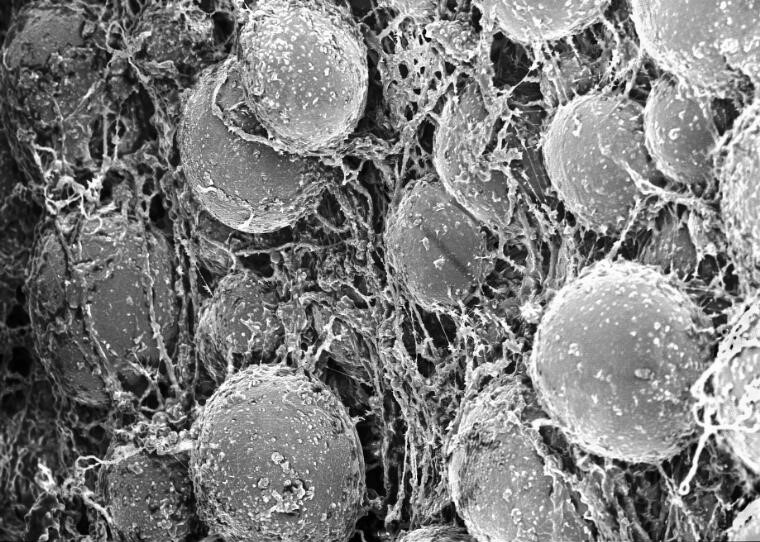
Brown fat is a kind of body fat that is activated when we get cold, also known as brown adipose tissue. It generates heat to keep our body temperature homeostasis. Brown adipose tissue (BAT) (thermogenic adipocytes) is an emerging and promising field in the research in metabolic diseases. Either promoting BAT proliferation, or White adipose tissue browning are two of the most cutting-edge research lines.
In this article, Farnaz Shamsi et al. were interested in brown fat proliferation. Their work, made in the Joslin Diabetes Center identified for the first time that the temperature-sensitive ion channel Trpv1 (transient receptor potential cation subfamily V member 1) seems critical in the cold-induced de novo recruitment of BAT. These results could lead to possible obesity therapies and related metabolic disorders.
How to culture vascularized & immunocompetent 3D models in a standard Multiwell
Summary
The author states that “Brown adipose tissue (BAT) and beige fat function in energy expenditure in part due to their role in thermoregulation, making these tissues attractive targets for treating obesity and metabolic disorders. While prolonged cold exposure promotes de novo recruitment of brown adipocytes, the exact sources of cold-induced thermogenic adipocytes are not completely understood. Here, we identify transient receptor potential cation channel subfamily V member 1 (Trpv1)+ vascular smooth muscle (VSM) cells as previously unidentified thermogenic adipocyte progenitors. Single-cell RNA sequencing analysis of interscapular brown adipose depots reveals, in addition to the previously known platelet-derived growth factor receptor (Pdgfr)α-expressing mesenchymal progenitors, a population of VSM-derived adipocyte progenitor cells (VSM-APC) expressing the temperature-sensitive cation channel Trpv1. We demonstrate that cold exposure induces the proliferation of Trpv1+ VSM-APCs and enhances their differentiation to highly thermogenic adipocytes. Together, these findings illustrate the landscape of the thermogenic adipose niche at single-cell resolution and identify a new cellular origin for the development of brown and beige adipocytes.”
“The identification of Trpv1-expressing cells as a new source of cold-induced brown or beige adipocytes suggests it might be possible to refine the use of cold temperatures to treat obesity by developing drugs that recapitulate the effects of cold exposure at the cellular level,” added Tseng.
References
Shamsi, F., Piper, M., Ho, LL. et al. Vascular smooth muscle-derived Trpv1+ progenitors are a source of cold-induced thermogenic adipocytes. Nat Metab (2021). https://doi.org/10.1038/s42255-021-00373-z
FAQ
Brown fat, or brown adipose tissue (BAT), is a type of body fat that is activated by cold. It functions to generate heat to maintain the body’s temperature. BAT and beige fat are involved in energy expenditure and thermoregulation. This makes them attractive targets for treatments for obesity and metabolic disorders. Research in this area is an emerging field. One line of research is focussed on promoting the proliferation of BAT. Another seeks to understand the "browning" of white adipose tissue. This study was interested in brown fat proliferation.
While it is known that prolonged cold exposure promotes the recruitment of new brown adipocytes, their exact sources have not been completely understood. This study identified a previously unknown source of thermogenic adipocyte progenitors. These progenitors are vascular smooth muscle (VSM) cells that are positive for Trpv1. The identification was made using single-cell RNA sequencing analysis of interscapular brown adipose depots. This analysis found a population of VSM-derived adipocyte progenitor cells (VSM-APC). These cells express the temperature-sensitive cation channel Trpv1. This population was found in addition to the previously known mesenchymal progenitors that express Pdgfr$\\alpha$.
The study demonstrated how cold exposure affects these newly identified Trpv1+ vascular smooth muscle-derived adipocyte progenitor cells (VSM-APCs). It was shown that cold induces the proliferation of these cells. This means that more of these progenitor cells are created in response to cold. Cold exposure was also shown to enhance their differentiation. This process causes them to change into highly thermogenic adipocytes. These findings provide a new understanding of the thermogenic adipose niche. They also identify a new cellular origin for the development of brown and beige adipocytes.
The identification of cells expressing Trpv1 as a new source of cold-induced adipocytes may lead to new therapies. These results could inform possible treatments for obesity and related metabolic disorders. The findings suggest it might be possible to refine the use of cold temperatures for treating obesity. This could be done by developing drugs that are able to recapitulate the effects of cold exposure. These drugs would work at the cellular level. This new information will inform future strategies that seek to use thermogenic adipose tissue as a therapeutic target for type 2 diabetes and other metabolic diseases.